The William Goebel assassination: a governor shot on the Capitol lawn, and no one ever proved who fired.
On Jan 30, 1900, William Goebel, a candidate disputing a bitterly contested Kentucky governor's election, was shot in Frankfort as he walked to the Old State Capitol. He was sworn in as governor the next day and died on Feb 3. Sixteen people were indicted, three were convicted, and every one of them was eventually pardoned.
Case file at a glance
This is the oldest case on the site and the only assassination of a sitting US governor. Prosecutors said a political conspiracy led by the outgoing Republican administration planned it. The shooter was never established, the main witness changed his account, and the convicted men were pardoned. The case is effectively unsolved.
- Shots from a nearby building.Five or six shots were fired from the State Building next to the Old State Capitol, according to accounts. Goebel was struck in the chest.
- A disputed election.The election result was still contested, and acting governor William S. Taylor called out the militia and moved the legislature to London, Kentucky.
- Sixteen indicted, three convicted.Everyone convicted or accused of a role was acquitted or pardoned. Wikipedia says the identity of the assassin remains unknown.
- The main witness shifted.One convicted man turned state's evidence after two years. The defense pointed to contradictions in his account.
Editorial assessment of public sources, not a finding of fact. Nobody named here has been charged unless this page says so.
What happened
Details come from the Wikipedia articles on Goebel and on one of the convicted men, and a LEX18 history piece. We did not read court records or newspapers from 1900.
The shooting
Goebel walks to the Old State Capitol in Frankfort with two bodyguards. Shots are fired from the nearby State Building. He is struck in the chest. He had been warned of a rumored plot.
Sworn in
Goebel is sworn in as governor the day after the shooting, while dying.
He dies
William Goebel dies. Acting governor Taylor had called out the militia and ordered the legislature into special session in London, Kentucky.
Indictments
Sixteen people are indicted, including Taylor. Three accept immunity for testimony and five go to trial. Two are acquitted.
Convictions overturned and retried
The first convictions of the secretary of state and an alleged shooter are overturned on appeal. Each is tried again and convicted again.
A turned witness
A third man, sentenced to life, turns state's evidence after about two years and testifies against the others.
Pardons
Governor Augustus Willson pardons the secretary of state and the alleged shooter in 1908 and the former acting governor in 1909. Governor James D. Black pardons the turned witness in 1919.
Victims
A Kentucky politician in the middle of a disputed election.
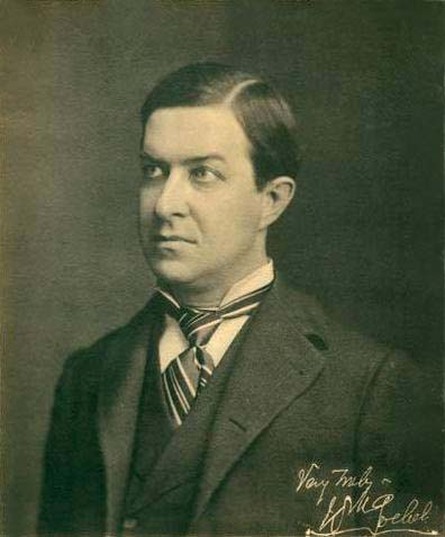
Photograph c. 1889, Kentucky Historical Society. Public domain, via Wikimedia Commons.
DiedWilliam Goebel, 44
A Kentucky politician who claimed the governorship in a contested race. He was shot the day before he was to take office and died after being sworn in, making him the only US governor to be assassinated in office.
We found no freely licensed photo, so a silhouette is shown. Family members or others who want a photo added, changed, or removed can use the contact form at the bottom of this page.
Evidence
What exists, and what each piece may or may not mean.
| Item | What is known | Disputed or unknown |
|---|---|---|
| The shots | Five or six shots were fired from the State Building, per accounts. | The exact number and the shooter: never established. |
| The convicted men | Three were convicted at various times. | Each conviction was overturned or pardoned. Two were tried more than once. |
| The turned witness | One man testified against two others after being sentenced to life. | The defense pointed to contradictions in his account. |
| The fugitive | The former acting governor fled to Indiana. The Indiana governor refused extradition. | He was never questioned in court. |
Public documents
Secondary histories are the public record. Primary records are in state archives.
| Document | Holder | What it shows | Access |
|---|---|---|---|
| Wikipedia: William Goebel | Wikipedia | Shooting, indictments, convictions, pardons. | Online, free |
| Trial transcripts and pardon messages | Kentucky Department for Libraries and Archives; Franklin County court | The 1900s trials and the governors' pardons. | Request needed |
Access labels: Online, free = we could open it. Fan-hosted copy = a private researcher posted scans; originals are held by the named agency, and we cannot vouch for completeness. Quoted in news = reporters read it; we did not see the document itself. Request needed = held by an agency or court. Withheld = the holder has not released it. We cannot reach non-public records, and we do not try to.
Online discussion (unverified)
Where people talk about this case online, and how to read it.
| Platform | Live search | What you tend to find |
|---|---|---|
| Google: Reddit | site:reddit.com search | Public Reddit threads that Google has indexed, including old discussions. |
| Google: X and Twitter | X and Twitter posts | Public posts and profiles that appear in search results. |
| Google: Facebook | Public Facebook pages and posts | Only public pages and groups that Google can see. Private groups never appear. |
| Google: Instagram and TikTok | Instagram and TikTok | Public posts, memorials, and videos. |
| Google: forums | Forums and message boards | Long-running true-crime forums. |
| Google News | Latest news | Newest reporting, which is usually more reliable than posts. |
| Search Reddit | Long discussion threads and theories, often by amateur researchers. No sign-in needed to read. | |
| X (Twitter) | Search X | Short posts, news links, and anniversary notes. May require sign-in. |
| Search Facebook | Public groups and family or community pages. Requires sign-in. | |
| Search #williamgoebel | Memorial and true-crime posts. Requires sign-in. | |
| YouTube | Search YouTube | Documentaries, news clips, and interviews. Quality varies widely. |
Be careful with online theories. Naming a private person as a suspect can harm an innocent family, and many "identifications" on forums have been wrong. Our own tools could not read these platforms: Reddit blocks automated access, and the others require an account. The Google searches above work from your browser. To get new public mentions by email, make a free Google Alert for the case name in quotation marks.
Coverage timeline and verification
What local and national reports say, and when we last checked for a solution.
Status is re-checked on a regular schedule. If you know of a development we missed, use the clue form near the top of this page or the contact form, and include a link.
Suspects
Several people were charged in 1900. All were later acquitted or pardoned.
Caleb Powers, secretary of state
Why named: Prosecutors called him the mastermind. He was convicted of complicity, retried three times, and pardoned.
Against: Republican appeal courts overturned his first conviction. He was pardoned by Governor Willson in 1908 and died in 1932.
Jim Howard, alleged shooter
Why named: He was accused of being the actual shooter and was convicted three times.
Against: His convictions were overturned on appeal before later ones. He was pardoned by Governor Willson in 1908.
Henry Youtsey
Why named: He was sentenced to life, then turned state's evidence and testified against Powers and Howard.
Against: The defense pointed to contradictions in his account. Paroled in 1916, pardoned in 1919, died in 1942.
William S. Taylor, acting governor
Why named: He was indicted and fled to Indianapolis.
Against: Indiana refused extradition. Pardoned in 1909. Died in 1928.
Where a card shows a silhouette, we found no photo. Anyone who wants a photo added, changed, or removed can use the contact form at the bottom of this page.
Latest lead: whether any one account of the shooting can be trusted
The case turns on whether the 1900 testimony can be relied on, and no new evidence has surfaced.
What is known
- Wikipedia says the identity of the assassin remains unknown and that most historians agree on that.
- The state's main witness gave an account the defense said was contradictory.
- The convicted men were pardoned after their convictions were questioned.
What would settle it
- Reexamine the physical evidence held by the Kentucky Historical Society or Kentucky Department for Libraries and Archives, if it survives.
- Review the trial transcripts for each defendant against each other.
- Look for new private papers from the participants.
A planned political killing with a shooter who was shielded
We put the chance that the shooting was planned by a group linked to the outgoing administration at roughly 60%, because prosecutors argued it and the contemporary evidence points that way. We put the chance of the shooter ever being identified at roughly 2%, because the physical evidence is more than 125 years old.
Editorial judgment, not statistics.
Elimination matrix
"—" means no public information, not a clean result.
| Person or idea | Alleged role | Legal outcome | Status |
|---|---|---|---|
| Caleb Powers | ✓ accused of planning | ? convicted, retried, pardoned | ✗ pardoned 1908 |
| Jim Howard | ✓ accused of firing | ? convicted, retried, pardoned | ✗ pardoned 1908 |
| Henry Youtsey | ✓ accused of helping | ? convicted, testified | ✗ pardoned 1919 |
| William S. Taylor | ? accused of conspiracy | — never tried | ✗ pardoned 1909 |
✗ excluded or contradicted · ✓ supports · ? disputed · — nothing public. No cell is an official finding.
Our hypothesis
Editorial reading of public records. A working theory, not a finding, and it names no individual.
A coordinated plot around a disputed election, with the shooter never proven
- The timing was political. He was shot the day before taking office in a contested election.
- The shots came from a government building. They were fired from the State Building next to the Old State Capitol.
- The prosecution's case relied on a turned witness. That weakened every verdict.
- The outcome was political too. The convicted were pardoned by a governor of the other side.
Judgment, not statistics.
Missing links
Questions raised by gaps in the public record.
1. The shooter
Who fired and from which window.
2. The weapon
Whether the rifle was found and kept.
3. The turned witness
Why he changed his account and what he gained.
4. The extradition refusal
What Indiana officials knew in 1900.
5. Surviving papers
Private letters and notes of the people involved.
6. Pardons
Whether the pardon messages explain the governor's reasons.
Evidence gaps
"Not public" means we could not find a report.
| Item | Tested | Gap |
|---|---|---|
| Physical evidence | Collected in 1900. | Whether it survives: unknown. |
| Trial records | Several trials. | We did not read them. |
| Newspaper archives | Extensive 1900 coverage. | Not searchable by our tools. |
Forensic tech
| Tool | What it could do | Status here |
|---|---|---|
| DNA from retained evidence | Identify a donor or exclude people. | Unknown; not reported |
| Forensic genetic genealogy | Identify an unknown donor from relatives. | Needs usable DNA; none reported |
| Ballistics database (NIBIN) | Link recovered casings or bullets to other crimes. | Not reported |
Solved cases
Local cases that moved after decades.
Carol Sue Klaber (Boone County, KY, 1976)
Investigators say a private genealogy investigation helped them identify Thomas Dunaway, who died in 1990, as the man who killed the 16-year-old. He cannot be indicted, so prosecutors sent a letter saying he would have been charged. The lesson: genealogy can name a killer after decades, even when no trial is possible.
Forensic genetic genealogy training
In 2024, local investigators were being trained in the technique, which has already helped solve Cincinnati-area cases, according to FOX19. The lesson: the tool is now local, so cases with usable DNA have a real path forward.
Golden State Killer
Old crime-scene DNA matched relatives in a public database and led to a 2018 arrest. The lesson: a usable sample can still work after decades.
Case details come from public news coverage and the Boone County Sheriff's cold-case list. Confirm in court records.
False leads
| Claim | Source and date | Where it stands |
|---|---|---|
| A single named shooter was proven | Older histories | Wikipedia says the assassin remains unknown. |
| The pardons mean innocence | Common claim | A pardon is not a finding of innocence. The men were pardoned after convictions were questioned. |
| Details of the shots | Various | Accounts differ on five or six shots. |
Where
The shooting happened at the Old State Capitol in Frankfort, Kentucky.
Open in maps: Old State Capitol, Frankfort. We show no photograph of the scene.
Source ratings
| Source | Type | Rating | Use with care because |
|---|---|---|---|
| Wikipedia, William Goebel | Encyclopedia | B | Summary with citations; we did not check them all. |
| Wikipedia, Caleb Powers | Encyclopedia | B | Seen in search results; not opened. |
| LEX18 history piece | Local news | B- | Seen in search results; not opened. |
Records
Kentucky Historical Society
Holds the photograph and historical records.
Kentucky Department for Libraries and Archives
State records for the 1900 trials and pardons.
Franklin County Circuit Court
Records of the original indictments and trials.
Sample public-records request
Under the Kentucky Open Records Act, I request copies of non-exempt records relating to the 1900 assassination of William Goebel in Frankfort, including incident reports, laboratory reports, and any evidence inventory. Please send electronic copies. If any part is withheld, please identify the exemption relied on and release all reasonably segregable material.
Agencies often withhold records of open investigations, so expect partial answers.
Remembering the victims
William Goebel was 44 years old.
News & databases
In the news
Loading headlines…
Sources
Every fact on this page comes from one of these. Where they disagree, we say so above.
- William Goebel, Wikipedia (details of the shooting, indictments, convictions, pardons).
- Caleb Powers, Wikipedia (seen in search results; not opened).
- Kentucky's dark past: the assassination of William Goebel, LEX18 (seen in search results; not opened).
This is a historical case, so the sources are secondary. We did not read trial transcripts or 1900 newspapers. Dates of the pardons are as given by Wikipedia.
Change log
- Oct 8, 2026: File published.