The Black Dahlia: 79 years of confessions, one case file still sealed.
On January 15, 1947, a woman's body was found in a vacant lot in Los Angeles. She was Elizabeth Short, 22. Hundreds of people have confessed, dozens have been suspected, and the LAPD has never closed the case. In 2026 new claims put an old suspect back at the center.
Case file at a glance
The Black Dahlia case is stuck on records, not clues. The key items are a sealed autopsy report, grand-jury files, and whatever physical evidence the LAPD still holds. Until those are opened and retested, every theory is guesswork.
- She was identified by fingerprints.The FBI matched her prints to a 1943 arrest record. Her whereabouts from Jan 9 to Jan 15, 1947 are still unknown.
- The killer wrote to the press.A caller and letters signed "Black Dahlia Avenger" arrived in January 1947, along with a package of her belongings that had been wiped with gasoline.
- No suspect has ever been proven.Police cleared or lost interest in every early suspect. Later books name others, mostly without physical proof.
- Three new threads in 2026.A 1943 fingerprint card under review by an LAPD detective, a documentary team's claim of old blood in a motel room, and a petition to release the full autopsy report.
Editorial assessment of public sources, not a finding of fact. Nobody named here has been charged.
What happened
Dates come from police, coroner, and press records. We keep graphic detail to what is needed to understand the case.
Short moves to Los Angeles
Elizabeth Short, born July 29, 1924 in Boston, spends her last six months in southern California, working odd jobs and waitressing.
The last confirmed day
Robert "Red" Manley, a 25-year-old salesman she had been dating, drives her from San Diego to Los Angeles. He says he dropped her at the Biltmore Hotel, where she planned to meet a sister. A 1997 Los Angeles Times article questioned whether she was actually seen at the Biltmore. Her whereabouts for the next six days are unknown.
Discovery
Her body is found in a vacant lot on South Norton Avenue in Leimert Park. It had been severed at the waist, washed, and posed. Detectives find a heel print and a cement sack nearby. The autopsy, performed Jan 16 by coroner Frederick Newbarr, gives the cause as hemorrhage from facial wounds and shock from blows to the head and face.
FBI fingerprints
Her prints, sent to the FBI, match a 1943 arrest record. Reporters reach her mother in Boston before police do, and tell her false details to draw out information.
The "Black Dahlia Avenger"
On Jan 21 a caller tells a Los Angeles Examiner editor that souvenirs will arrive. On Jan 24 an envelope arrives with her birth certificate, business cards, photos, and an address book containing the name Mark Hansen, all wiped with gasoline. (Accounts differ on which paper received it.) A handbag and shoe turn up two miles from the scene. A Jan 26 letter promises a surrender on Jan 29; no one appears. A cut-and-paste letter on Jan 29 says the killer changed his mind.
Confessions and suspects
Police receive about 60 confessions in the first weeks and interview roughly 150 men. Many confessions are false; several confessors are charged with obstruction. A $10,000 reward is offered.
Grand jury and the Jemison list
A grand jury examines LAPD homicide failures, including this case. A 1951 list names 22 persons of interest. In 1949–50, the DA's office wiretaps a physician named in later accusations, a file that surfaces in 2003.
Books and claims
Janice Knowlton says in the early 1990s, from "recovered memories," that her father did it. In 2003 Steve Hodel publishes his accusation against his father. In 2017 Piu Eatwell's book implicates Leslie Dillon. Each claim is disputed.
New claims
In Dec 2025 investigator Alex Baber names Marvin Margolis, also tied to the Zodiac case. In May 2026 an LAPD detective says he is looking at Baber's 1943 fingerprint card. In July 2026 the "Deconstructing Dahlia" team says it found nearly 40 blood samples in a motel room it dismantled. A petition asks the LAPD to release Short's full autopsy report. A book by William J. Mann, published in 2026, calls Margolis the one suspect he could not rule out.
The victim
Elizabeth Short was 22. She is better known by a nickname the press gave her than by her own name.

From an LAPD bulletin, Jan 15, 1947. Public domain per Wikimedia Commons.
DiedElizabeth Short, 22
Born July 29, 1924 in Hyde Park, Boston, the third of five daughters. She worked as a waitress and is often called an aspiring actress, though no acting credits are known. She is buried at Mountain View Cemetery in Oakland, California.
Rumors about her private life, repeated for decades, are unsubstantiated. Her family and others who want a photo added, changed, or removed can use the contact form at the bottom of this page.
Evidence
What exists, and what each piece may or may not mean.
| Item | What is known | Disputed or unknown |
|---|---|---|
| Autopsy report | Done Jan 16, 1947. Cause: hemorrhage and shock from blows to the head and face. Ligature marks on wrists, ankles, and neck. | The full, unredacted report has not been released. Early claims of torture were not in the official report. Claims of pregnancy persist, but the autopsy says she was not pregnant. |
| The package (Jan 24, 1947) | Birth certificate, cards, photos, and an address book, wiped with gasoline. | Any surviving prints or biological material: not public. |
| Letters and calls | "Black Dahlia Avenger" notes (Jan 26 and 29, 1947) and a call to the Examiner. | Authenticity of each is debated; many hoaxes followed. |
| Heel print and cement sack | Found near the body. | Never tied to a person. |
| Handbag and shoe | Found in an alley two miles away, wiped clean. | No public result. |
| Crime scene | Body left in a vacant lot, posed. | Where she was held and killed is unknown. Claims about a motel or other locations are unverified. |
Public documents
The FBI's file is public. The LAPD's file is not, and that is the subject of a 2026 petition.
| Document | Holder | What it shows | Access |
|---|---|---|---|
| Elizabeth Short FBI file, Parts 1 and 2 | FBI (Vault / FOIA library) | The FBI's supporting file. The FBI identified her from fingerprints and notes LAPD had jurisdiction, so the file covers its supporting role. The page blocked our automated check, so we have not read it. | Online, free |
| The Black Dahlia Murder (FBI story, 2006) | FBI | The FBI's own summary and pointer to the posted files. | Online, free |
| LAPD case file and unredacted autopsy report | Los Angeles Police Department; LA County Coroner | The core 1947 investigative record. A 2026 petition asks for its release. | Withheld or sealed |
| 1950 DA surveillance transcripts (DA Case File No. 30-1268) | LA County District Attorney (published by Steve Hodel) | Transcripts of 1950 surveillance of Dr. George Hodel. Published by the man who accuses his father, so it is an interested source. We did not verify the originals. | Online, fan-hosted copy |
| Petition for release of the LAPD records (LA Magazine, May 28, 2026) | Talestorm Productions; Justice Cannot Be Silenced Foundation | Describes the request and says the LAPD has not responded publicly. | Quoted in news |
Access labels: Online, free = we could open it. Fan-hosted copy = a private researcher posted scans; originals are held by the named agency, and we cannot vouch for completeness. Quoted in news = reporters read it; we did not see the document itself. Request needed = held by an agency or court. Withheld = the holder has not released it. We cannot reach non-public records, and we do not try to.
Online discussion (unverified)
Where people talk about this case online, and how to read it.
| Platform | Live search | What you tend to find |
|---|---|---|
| Google: Reddit | site:reddit.com search | Public Reddit threads that Google has indexed, including old discussions. |
| Google: X and Twitter | X and Twitter posts | Public posts and profiles that appear in search results. |
| Google: Facebook | Public Facebook pages and posts | Only public pages and groups that Google can see. Private groups never appear. |
| Google: Instagram and TikTok | Instagram and TikTok | Public posts, memorials, and videos. |
| Google: forums | Forums and message boards | Long-running true-crime forums. |
| Google News | Latest news | Newest reporting, which is usually more reliable than posts. |
| Search Reddit | Long discussion threads and theories, often by amateur researchers. No sign-in needed to read. | |
| X (Twitter) | Search X | Short posts, news links, and anniversary notes. May require sign-in. |
| Search Facebook | Public groups and family or community pages. Requires sign-in. | |
| Search #blackdahlia | Memorial and true-crime posts. Requires sign-in. | |
| YouTube | Search YouTube | Documentaries, news clips, and interviews. Quality varies widely. |
Be careful with online theories. Naming a private person as a suspect can harm an innocent family, and many "identifications" on forums have been wrong. Our own tools could not read these platforms: Reddit blocks automated access, and the others require an account. The Google searches above work from your browser. To get new public mentions by email, make a free Google Alert for the case name in quotation marks.
Coverage timeline and verification
What local and national reports say, and when we last checked for a solution.
| Date | Outlet | What it reported | Link |
|---|---|---|---|
| Oct 2006 | |||
| FBI | |||
| The FBI's own story on its supporting role and its posted files. | |||
| Read | |||
| Dec 23, 2025 | |||
| Newsweek | |||
| Margolis named as a suspect in both the Dahlia and Zodiac cases, relaying LA Times reporting. | |||
| Read | |||
| May 14, 2026 | |||
| Fox News | |||
| LAPD detective reviewing a 1943 fingerprint card. | |||
| Read | |||
| May 28, 2026 | |||
| LA Magazine | |||
| Petition asks the LAPD to release the unredacted autopsy; no public LAPD response. | |||
| Read | |||
| July 3, 2026 | |||
| LA Magazine | |||
| A documentary team claims nearly 40 blood samples from a motel room; DNA results pending. | |||
| Read |
Status is re-checked on a regular schedule. If you know of a development we missed, use the clue form near the top of this page or the contact form, and include a link.
Suspects
Police interviewed about 150 men early on, and the 1951 list named 22. These are the names most often raised.
Marvin Margolis (b. 1925, d. 1993)
Why named: One of Short's boyfriends, on the 1951 list. Navy medical corpsman at Okinawa, discharged 50% disabled; USC pre-med student. Lived for a time in the same building as Short and first understated how well he knew her. Author William J. Mann calls him the one suspect he could not exonerate. See the full section.
Against: His recently married wife gave him an alibi, and police eliminated him. Claims tying him to the Zodiac are unverified.
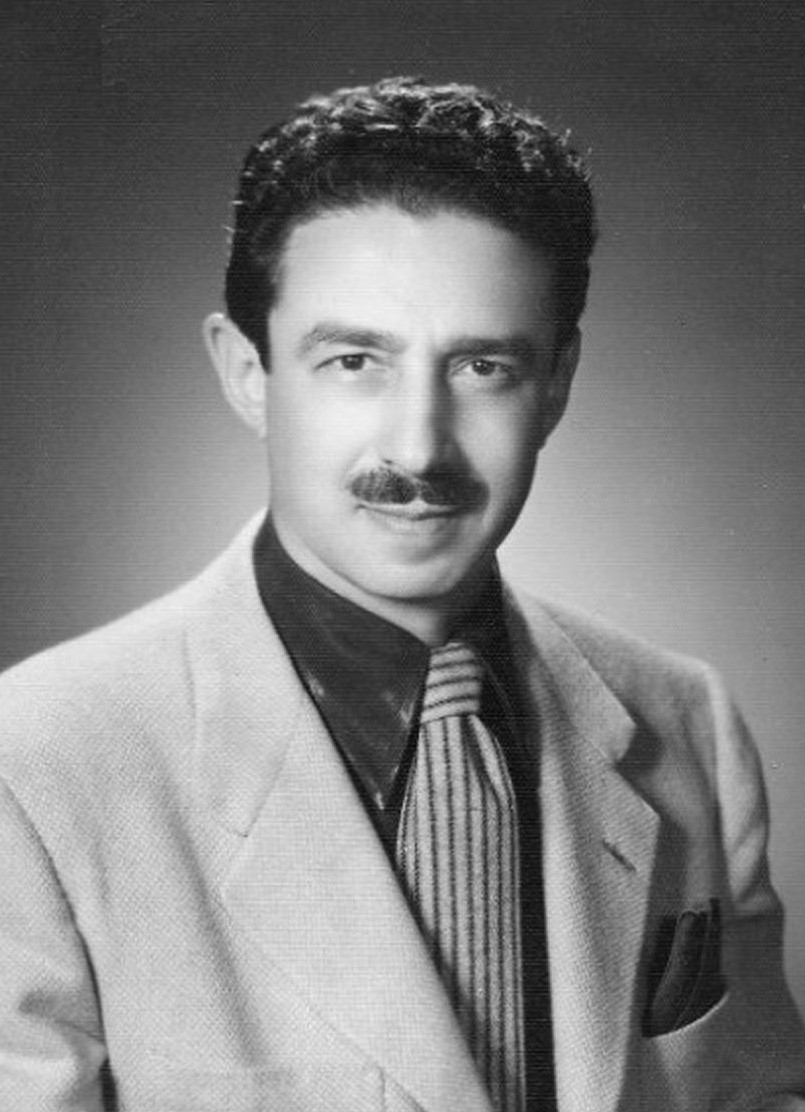
George Hodel, c. 1950. Photo: Steve Hodel, CC BY-SA 4.0, via Wikimedia Commons. Displayed cropped to fit. Steve Hodel is the person who accuses his father.
Cleared by LAPD; disputedGeorge Hodel
Why named: A physician accused of molesting his daughter in 1949 (he was acquitted) and wiretapped by the DA in 1949–50. A 2003 disclosure of grand jury notes quotes him joking about the killing. His son, former LAPD detective Steve Hodel, says he did it.
Against: LAPD cleared him after a month-long investigation and could not show he and Short ever met. Mann (2026) argues no convincing evidence they met.
Leslie Dillon
Why named: A former mortician who wrote letters to the LAPD in 1949 blaming a friend. A police psychiatrist believed he was the killer. Piu Eatwell's 2017 book supports this.
Against: No solid evidence. Researchers cite DA files placing him in San Francisco.
Robert "Red" Manley
Why named: One of the last people known to have seen her alive; he drove her to Los Angeles on Jan 9, 1947.
Against: Parts of his account were corroborated and he passed several polygraph tests.
Mark Hansen
Why named: Nightclub owner whose name was in the address book in the package. Short had stayed at his house. A friend said Short rejected his advances.
Against: No solid evidence linking him to the crime.
Carl Balsiger
Why named: On the 1951 list; his name was in her address book and his answers were evasive. Eli Frankel's 2025 book argues he did it and links him to a 1941 Kansas City murder.
Against: LAPD found no firm evidence; that murder file was never obtained.
Dr. Patrick O'Reilly
Why named: A surgeon on the 1951 list, linked to two of Short's friends and the subject of allegations dating to 1939.
Against: 2023 research found he had lied about his name and birthplace, which undermines his credibility but does not clear him.
George Knowlton (d. 1962)
Why named: His daughter Janice said in the early 1990s, from "recovered memories," that he killed Short.
Against: The lead detective said her claims did not fit the facts. A dig at the childhood home found nothing, and the autopsy found no pregnancy.
Where a card shows a silhouette, we found no freely licensed photo. Families or individuals who want a photo added, changed, or removed can use the contact form at the bottom of this page.
Latest suspect: Marvin Margolis
The same man is also named in our Zodiac file. This section covers what is specific to the Dahlia case.
Why he is the current suspect
- He fits more of the pattern than most. Mann says he is the only suspect who combines contact with Short, medical or anatomical experience, a history of disturbance, and access to a facility (a USC lab).
- He was on the 1951 list, and LAPD treated him as a key suspect. He was one of her boyfriends.
- A physical item is being checked. In May 2026 LAPD detective Marty Mojarro said a 1943 government fingerprint card, supplied by Baber and not previously held by police, "warrants further investigation."
- The alibi is thin. It comes from his recent wife, and the 1947 report lacks details.
The evidence claimed against him
| Claim | Source | Status | Our rating |
|---|---|---|---|
| Boyfriend; lived for a time in her building; first understated their relationship | LA Times, Newsweek, Wikipedia | Reported as fact. | Documented |
| Navy corpsman at Okinawa; USC pre-med; discharged 50% disabled | LA Times via Newsweek | Reported as fact. Shows motive-adjacent skills, not guilt. | Documented |
| His 1943 fingerprint card matches a print on a package mailed to a Los Angeles paper in Jan 1947 | Alex Baber | Baber says his team "could not exclude" him. LAPD says it needs vetting. No result published. | Open |
| A 1992–93 drawing titled "Elizabeth" shows wounds like Short's and a hidden word | Baber; provided by a family member | Unverified interpretation. | Weak |
| Handwriting in the Dahlia letters resembles his | Baber | No independent examiner reported. | Weak |
The case against the theory
- LAPD reportedly interviewed and cleared him in 1947. Researcher Larry Harnish says the report lacks alibi details and that he stayed a suspect after leaving the state.
- No published physical link. No fingerprint comparison result, DNA, or recovered item ties him to the body, the package, or a scene.
- A 22-year gap and a different crime. Linking this case to the 1969 Zodiac killings is an extra, unproven step.
- Family and expert disagreement. Some relatives reject the claim; some veteran detectives support it.
What would settle it
- Compare the 1943 card to every latent print the LAPD holds from 1947. The package, handbag, and shoe were wiped, so surviving prints may be few, and Mojarro said he could not comment on what exists.
- Test any retained biological evidence against a voluntary family sample.
- Release the unredacted autopsy and the 1949–50 DA files so independent examiners can check the claims.
- Verify his whereabouts for Jan 9–15, 1947 from employment, school, and military records.
Plausible, untested
We put the chance Margolis killed Elizabeth Short at roughly 20%, the highest of any named suspect, because he matches the profile and a physical comparison is possible. That is far from a conclusion. The chance he was also the Zodiac is far lower, at roughly 3–5%, since nothing physical connects the two cases. A fingerprint comparison result would change both numbers.
Editorial judgment, not statistics. We will revise when evidence changes.
Suspect elimination matrix
"—" means no public information, not a clean result.
| Suspect | Knew Short | Anatomical skill | Alibi / timeline | Physical link | Official status |
|---|---|---|---|---|---|
| Marvin Margolis | ✓ boyfriend | ✓ corpsman, pre-med | ? wife's alibi, thin | ? fingerprint card under review | ✗ eliminated in 1947 |
| George Hodel | ? no proof they met | ✓ physician | — | — none published | ✗ cleared by LAPD |
| Leslie Dillon | — | ✓ former mortician | ✗ DA files place him elsewhere | — | ? detained on other charges |
| Robert Manley | ✓ last known companion | — | — | — | ✗ passed polygraphs |
| Mark Hansen | ✓ acquaintance | — | — | ? name in address book | ✗ cleared |
| Carl Balsiger | ✓ acquaintance | — | — | — | ? no evidence found |
✗ excluded or contradicted · ✓ supports · ? disputed · — nothing public. No cell is an official finding.
Our hypothesis
Editorial reading of public records. A working theory, not a finding, and it names no individual.
An acquaintance with access to a private space and some anatomical skill, holding her for days
- She was held, not killed on the spot. She was last seen Jan 9 and found Jan 15. The body was washed and posed. That points to a place and several days.
- The killer knew how to handle a body. The cuts and the clean handling suggest medical, mortuary, or butchery experience, though that is an inference from descriptions and not a forensic finding.
- The killer wanted attention. The calls, the package, and the signed letters follow a pattern shared by later cases, including the Zodiac. That does not make them the same person.
- The best next step is records, not new theories. The unredacted autopsy, the DA files, and anything the LAPD still holds decide whether any claim can be tested.
Judgment, not statistics.
Missing links
Questions raised by gaps in the public record. Some may already have been answered privately.
1. Where she was Jan 9–15
Nothing confirms where she spent six days. The Biltmore sighting is itself questioned. A careful reconstruction of every sighting, sourced to 1947 records, is not published.
2. The unredacted autopsy
The report has been withheld for nearly eight decades. A petition backed by a documentary team and reportedly by surviving family asks for its release.
3. What the LAPD still holds
A public inventory of 1947 evidence (the package, handbag, shoe, clothing) would show what could be tested. An LAPD detective declined to say what exists.
4. The 1949–50 DA and grand-jury files
The Hodel wiretap file surfaced in 2003. Other material may remain unreleased.
5. The 1951 list of 22
Re-examining each name against modern records, and releasing the list's basis, would clear or sharpen leads.
6. The motel claim
A documentary team says it found blood in a room at a motel that was not open in 1947. DNA results are pending and the claim is unverified. A public method and independent lab review would matter.
7. The phone call
A caller reached the Examiner. Notes of that call and any witness descriptions have not been analyzed publicly.
8. The Margolis fingerprint card
A comparison to every available 1947 latent print, with a published result, would settle a major claim.
Evidence-gap tracker
"Not public" means we could not find a report.
| Item | Tested | Gap |
|---|---|---|
| Package, handbag, shoe (1947) | Wiped with gasoline; examined in 1947. | Surviving prints or biological traces: not public. |
| Body and clothing | Autopsy in 1947. | Retained samples and modern DNA testing: not public. |
| Heel print and cement sack | Documented in 1947. | No match reported. |
| Autopsy report | Existing. | Full unredacted version withheld. |
| Wiretap and grand-jury files | Partly disclosed in 2003. | Complete release: not public. |
| Motel room samples | Under "advanced" DNA testing, per the documentary team (July 2026). | No results; independent review: not public. |
| Margolis 1943 fingerprint card | Under LAPD review (May 2026). | No published comparison. |
Forensic technology readiness
| Tool | What it could do | Status here |
|---|---|---|
| Forensic genetic genealogy | Identify a donor through relatives' DNA. | Not reported Needs surviving biological evidence. |
| Fingerprint database search | Compare any surviving latents to modern databases. | Partly A 1943 card is being reviewed; a broader search is not public. |
| "Ancient DNA" methods | Recover degraded DNA from very old stains. | Claimed The documentary team says its samples are being tested this way. |
| Document / handwriting analysis | Compare 1947 letters to known writing. | Not public |
| Records digitization | Search newspaper, military, and school records for whereabouts. | Available |
How similar cases broke
Boston Strangler (Mary Sullivan)
In 2013, DNA from Sullivan's 1964 murder was matched through a relative to Albert DeSalvo. Lesson: 1960s evidence that was kept and stored properly can still produce answers.
Golden State Killer
Old crime-scene DNA matched relatives in a public database, leading to Joseph DeAngelo's arrest in 2018. Lesson: genealogy can bypass a dead-end suspect list.
What differs here
This evidence is from 1947 and was wiped, so little biological material may remain. Everything depends on what the LAPD kept.
Case details come from public news coverage. Confirm in court records.
Claim and false-lead log
| Claim | Source and date | Where it stands |
|---|---|---|
| George Hodel killed Short | Steve Hodel, 2003; endorsed by James Ellroy, 2004 | LAPD cleared him; Mann (2026) finds no convincing evidence they met. |
| Leslie Dillon killed Short | Piu Eatwell, 2017 | Disputed; DA files reportedly place him in San Francisco. |
| George Knowlton killed Short | Janice Knowlton, 1990s ("recovered memories") | Lead detective said it did not fit the facts. Nothing found at a dig. |
| Norman Chandler and Bugsy Siegel were involved | Donald Wolfe's 2005 book | Unverified, one author. |
| Jack Anderson Wilson killed Short | John Gilmore's book "Severed" | Gilmore's own accounts conflict. |
| Linked to the Cleveland Torso Murders | Various authors | Speculative; no proof tied the crimes. |
| Margolis was the Zodiac and the Dahlia killer | Alex Baber, Dec 2025 | No agency confirmation. See Zodiac file. |
| Blood found in a motel room | Deconstructing Dahlia team, July 2026 | Team's claim; DNA results pending. |
| Over 500 confessions | Police and press | Most considered false; several confessors charged with obstruction. |
Where it happened
Her body was found in a vacant lot on the west side of South Norton Avenue in Leimert Park. She was last placed at the Biltmore Hotel in downtown Los Angeles.
Open in maps: South Norton Avenue, Leimert Park · Biltmore Hotel. We show no photograph of the scene.
Source-quality ratings
| Source | Type | Rating | Use with care because |
|---|---|---|---|
| LAPD statements; coroner and FBI records | Agency | A | Brief; key records withheld. |
| Wikipedia: Black Dahlia and suspects | Tertiary | B− | The suspects article is tagged as needing more citations and leans on authors' books. |
| LA Times, Newsweek, Fox News, Hollywood Reporter | News | B+ | Relay claims by others. |
| LA Magazine on documentary claims | News (promotional context) | C+ | Tied to an upcoming documentary. |
| Books, podcasts, documentaries, independent investigators | Advocacy | D | Each argues one theory; evidence often unreleased. |
Who holds the case & how to request records
Los Angeles Police Department
Open case; cold-case detectives, including Marty Mojarro (named in May 2026 reporting).
LA County Medical Examiner
Autopsy and death records. The full report has been withheld.
LA County District Attorney
1949–50 files, including the Hodel wiretap.
FBI
Fingerprint identification. Records via the FBI Vault or FOIA.
Sample public-records request
Under the California Public Records Act, I request copies of non-exempt records relating to the 1947 homicide of Elizabeth Short, including the autopsy report, evidence inventories, and any index of evidence. Please send electronic copies. If any part is withheld, please identify the exemption relied on and release all reasonably segregable material.
Agencies often withhold records of open investigations, so expect partial answers. For the FBI, use a FOIA request instead.
Remembering Elizabeth Short
She was a young woman far from home. Her family spent decades without answers, and her surviving sisters died without them.
News & databases
In the news
Loading headlines…
News archives
Sources
Every fact on this page comes from one of these. Where they disagree, we say so above.
- Black Dahlia, Wikipedia (biography, timeline, autopsy, package and letters, confessions, grand jury).
- Black Dahlia suspects, Wikipedia (suspect evidence and disputes; the article is tagged as needing more citations).
- Were Zodiac Killer and Black Dahlia murderer the same man?, Newsweek, Dec 23, 2025 (Margolis biography and claims).
- LAPD examines new fingerprint tied to victim's ex-boyfriend, Fox News, May 14, 2026.
- Black Dahlia investigators claim major new blood evidence, LA Magazine, July 3, 2026.
- New petition demands release of secret Black Dahlia records, LA Magazine, May 28, 2026.
- Hollywood Reporter on William J. Mann's 2026 book (seen in search results; we did not open the full article).
Photo credits
| Image | Author / source | License (per Commons) |
|---|---|---|
| Elizabeth Short portrait | Los Angeles Police Department bulletin, Jan 15, 1947 | Public domain |
| George Hodel, c. 1950 | Steve Hodel | CC BY-SA 4.0 (credit required; shown cropped) |
Items marked "not public" mean we found no report, not that nothing was done. The motel blood claim, the Margolis fingerprint and cipher claims, and the Chandler/Siegel and Cleveland-torso links are unverified.
Change log
- Oct 8, 2026: File published.